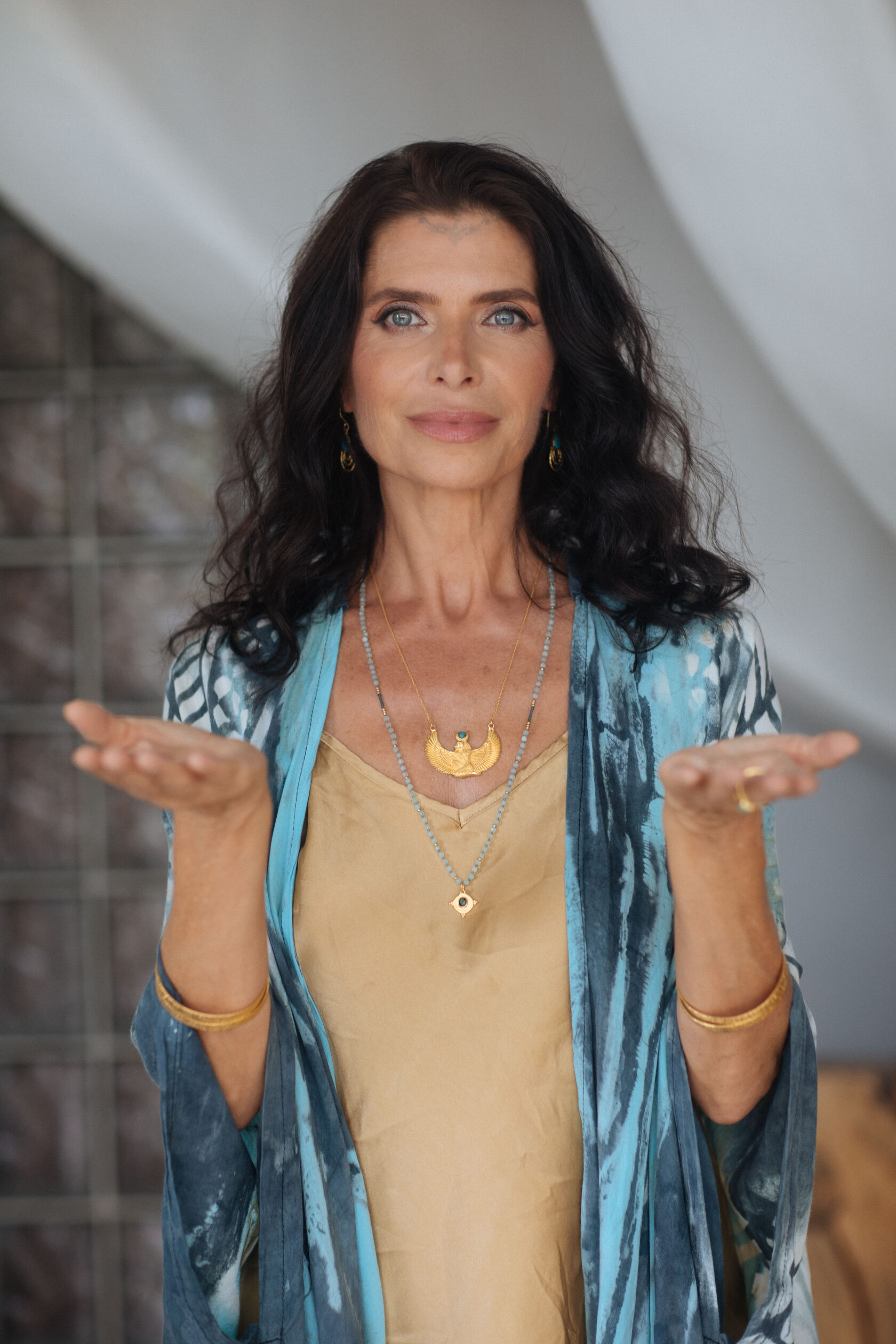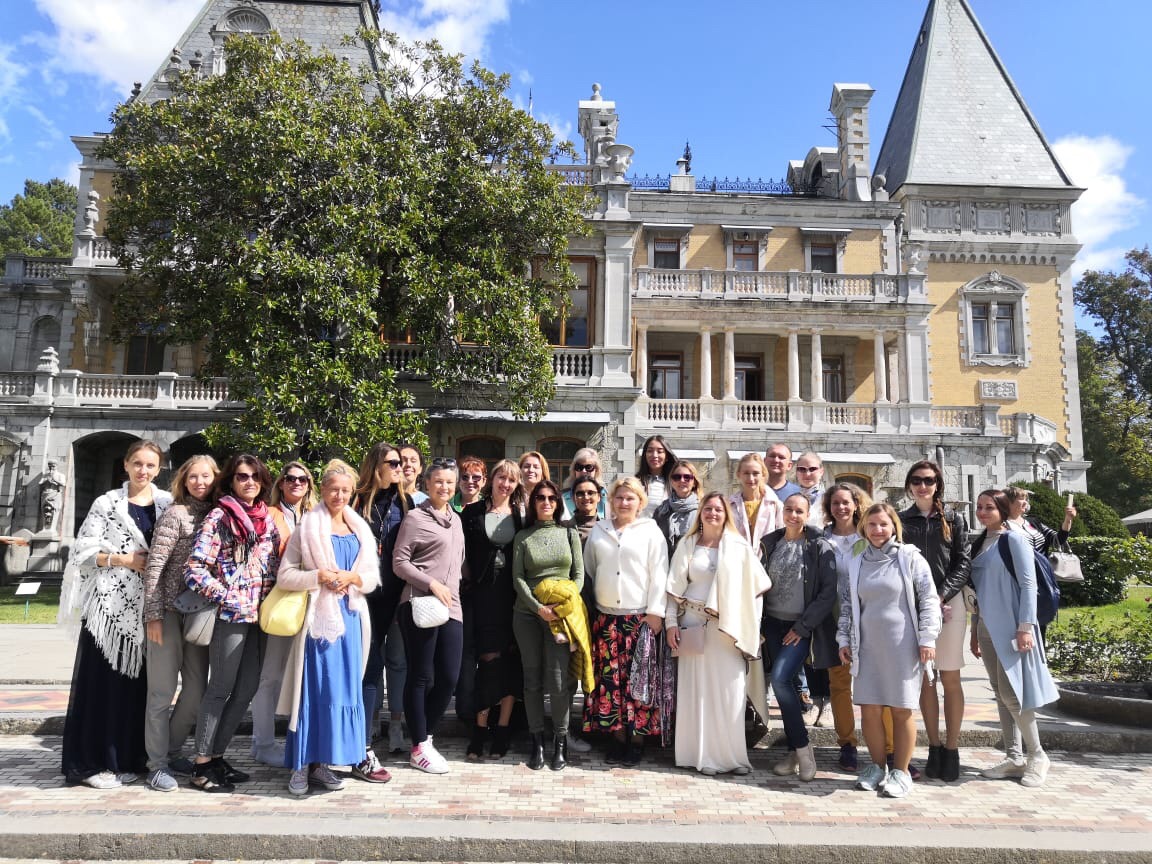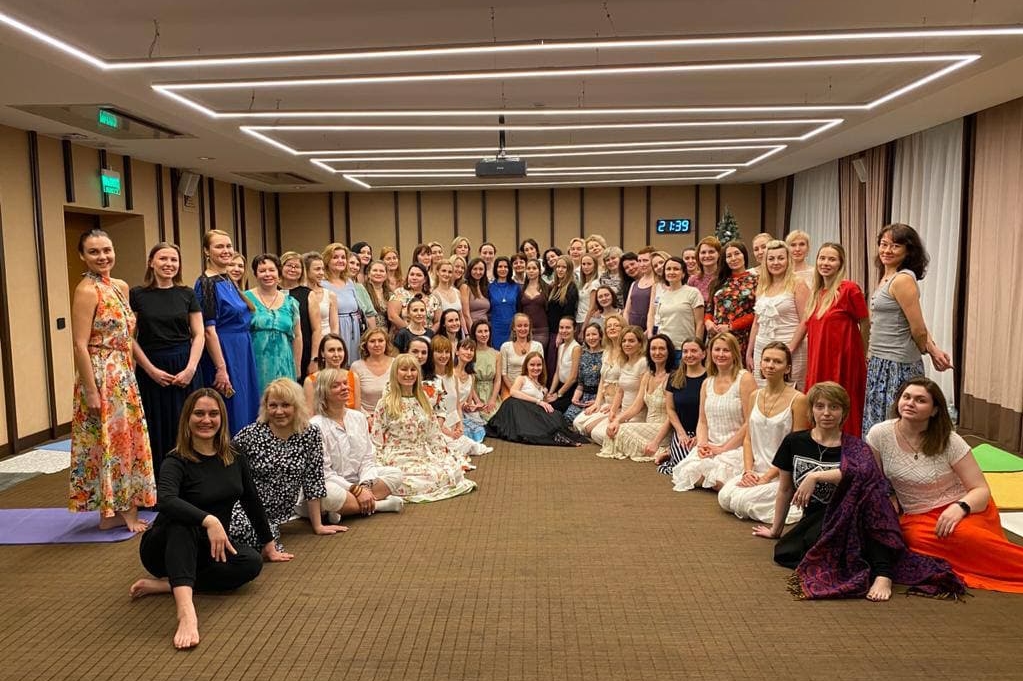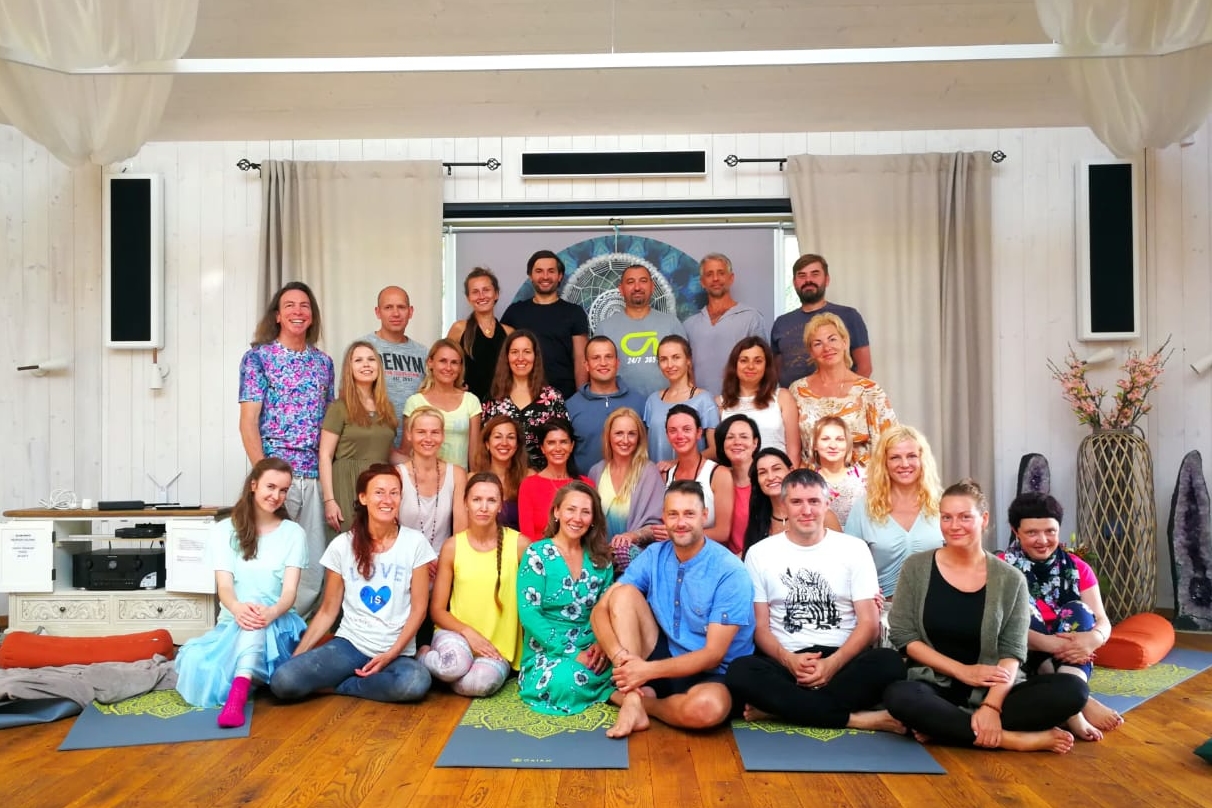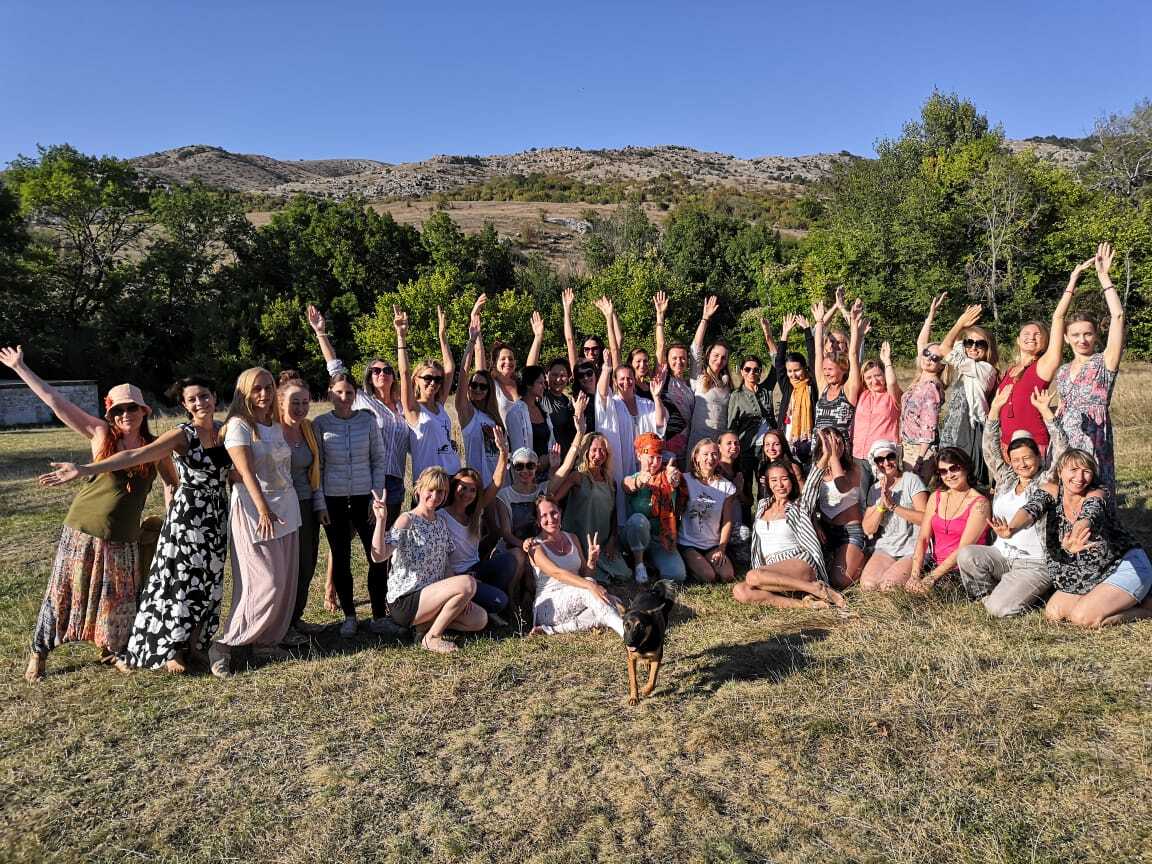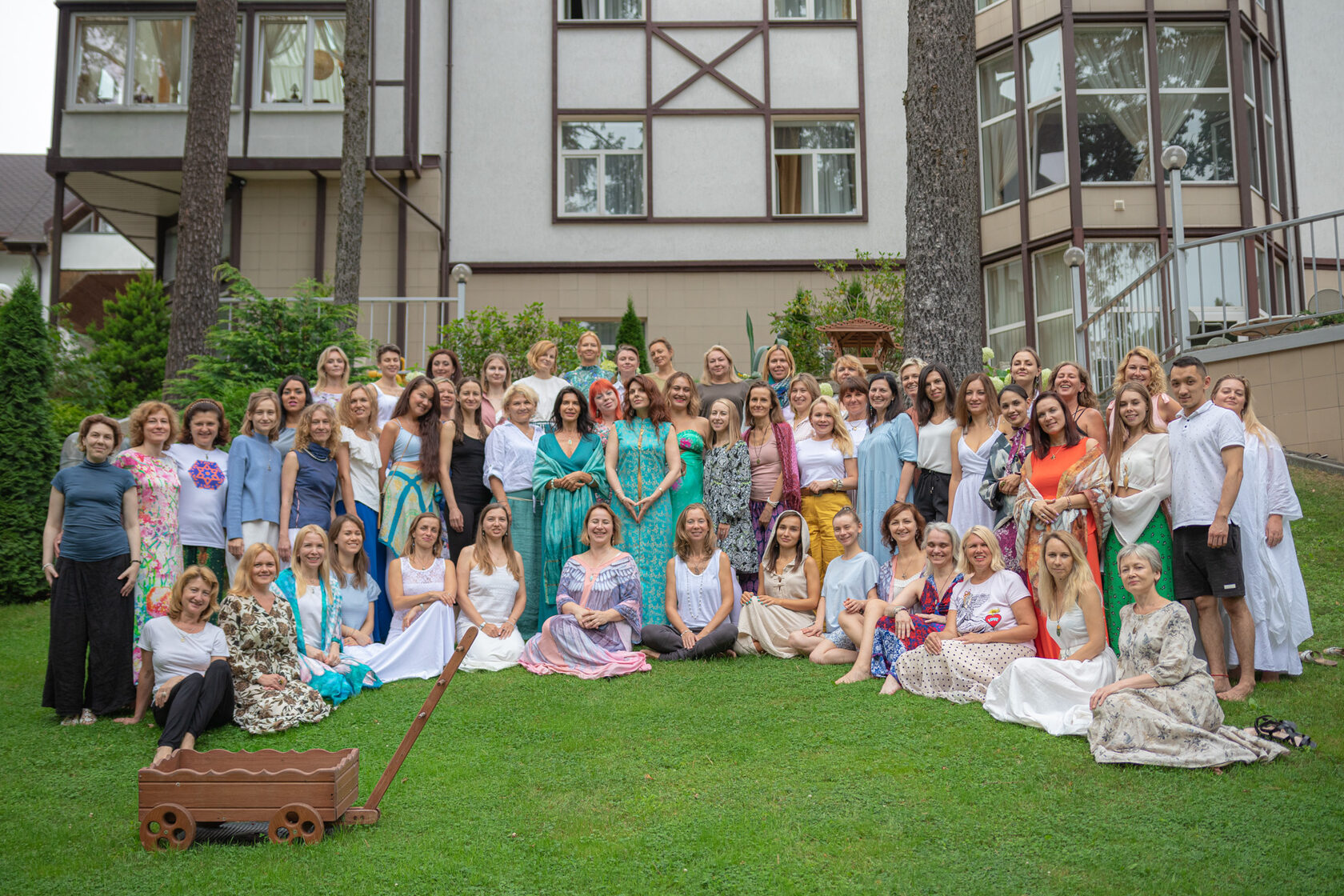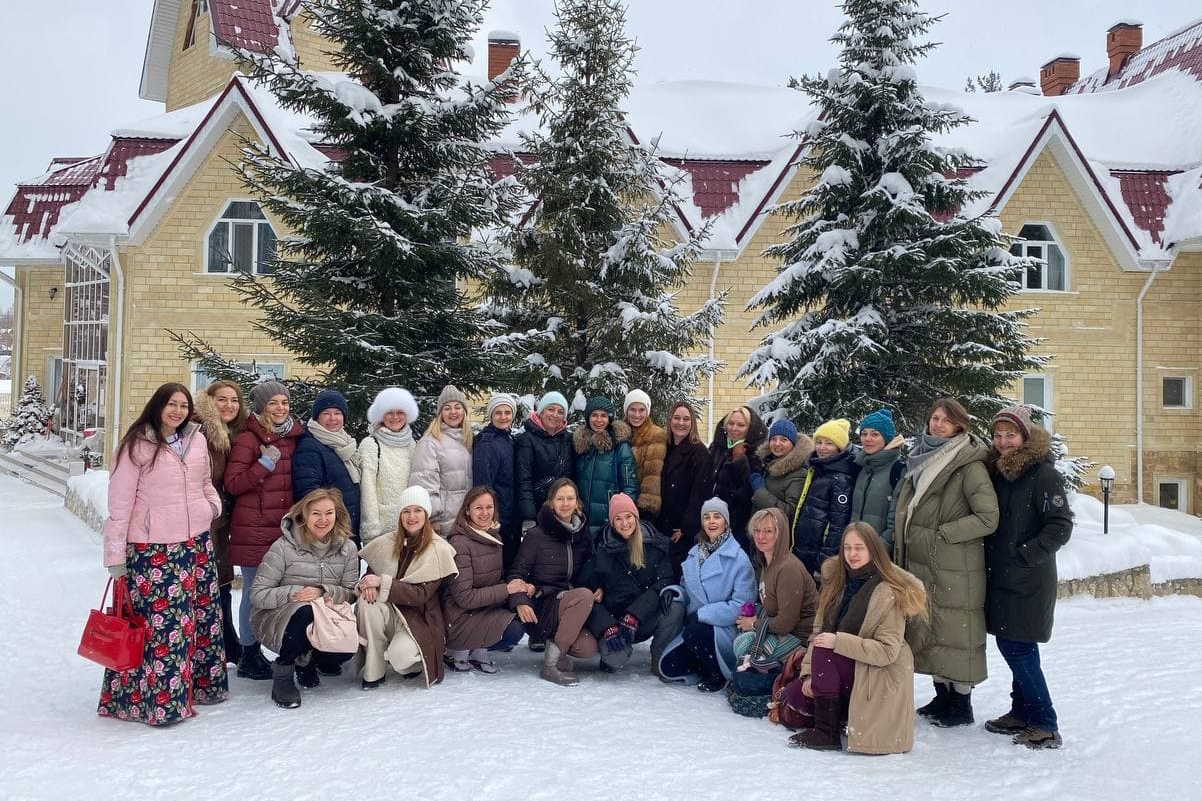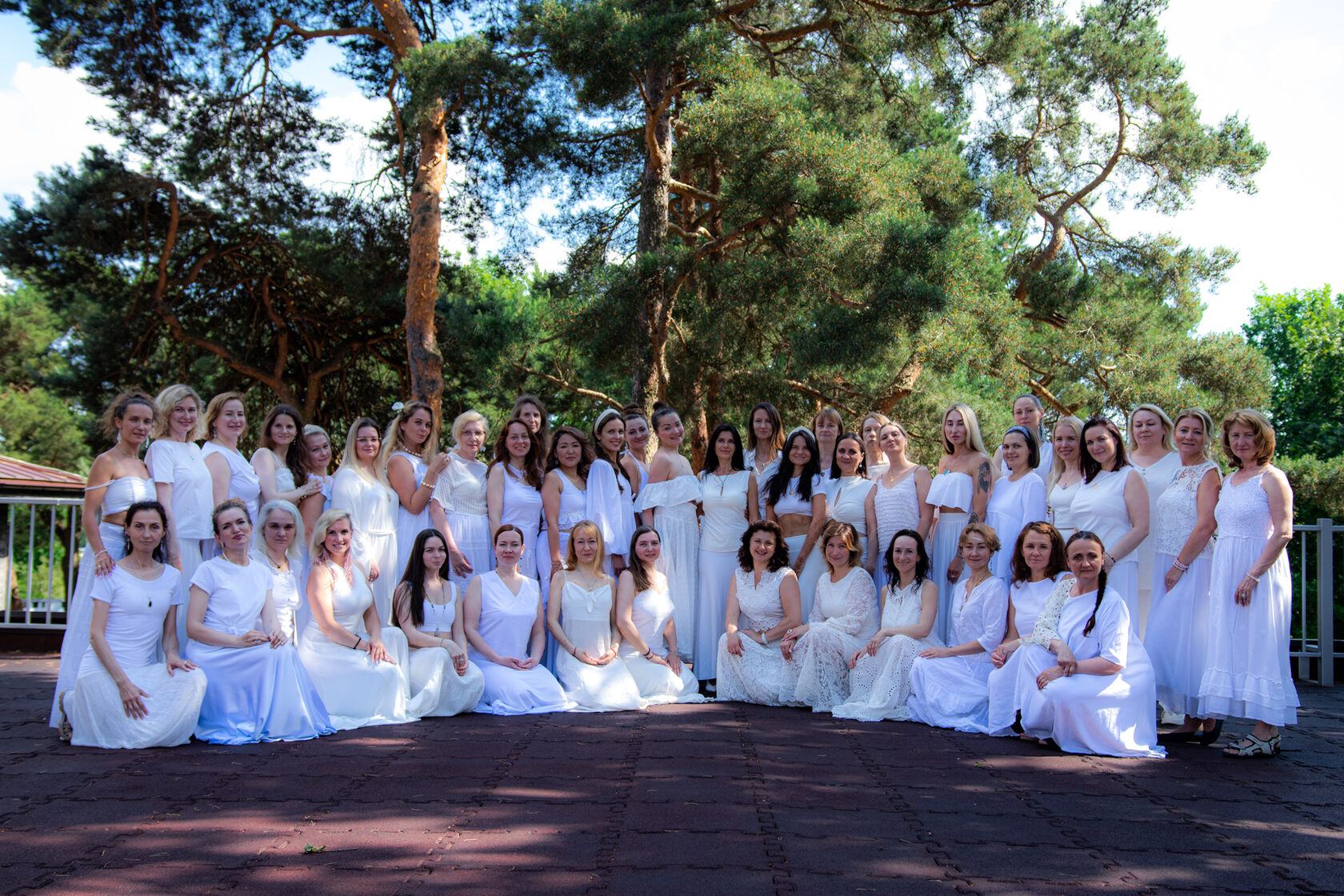
"Tantric meditation" gets searched by people picturing very different things, and much of what the word has come to mean online has little to do with the practice itself. The oldest layer of the tradition describes tantric meditation as a family of practices — some done alone, some with a partner, some in a group — that all train the same capacity: to meet any energy that arises, whatever its source, and answer it with pure, unconditional love. The tradition calls that trained capacity higher tantra. Maya Mandala did not originate that definition; her retreats offer a path toward actually touching it — alone, with a partner, or in a group.
The forms vary. Paired practice works with the dynamic between two people; solo practice works with the same capacity alone; group retreats add the field of a whole room moving through the same territory together. Maya Mandala's own retreats cover this ground from several directions — sexuality and sensuality, the relationship between a man and a woman, the priestess path, the development of higher abilities — because different people carry different blocks, and different formats reach them.
What follows describes what tantric meditation actually trains, how Maya Mandala's retreats help people approach it, and why the practice that reaches unconditional love looks nothing like its popular caricature.