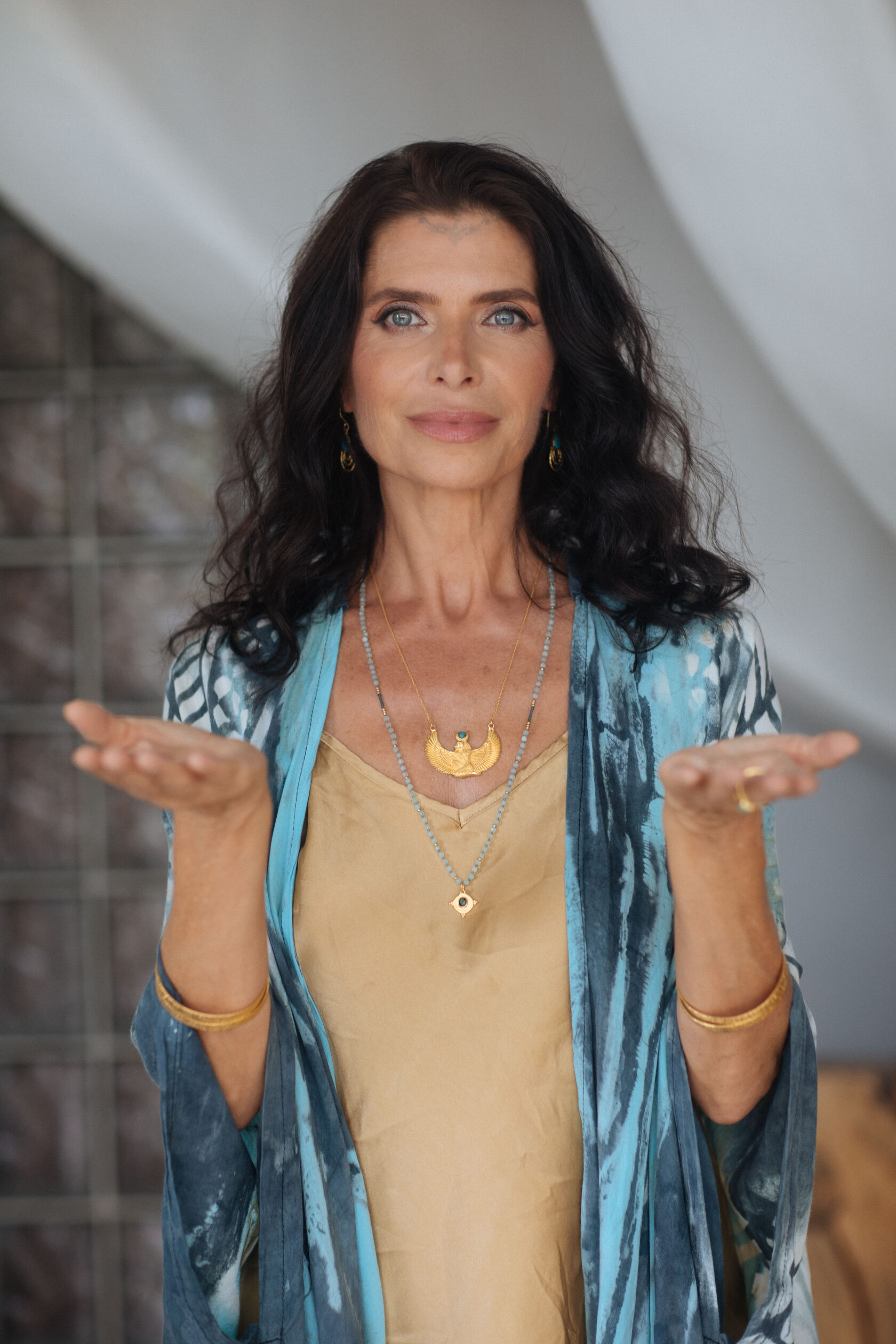
A father who is absent, conditional, or emotionally unavailable leaves a particular imprint. The father wound is the name for that imprint: a life scenario, held in the body, shaped by what the father was — and what he did not give. Maya has spent over 30 years meeting this in students: the daughter who still performs for a man's approval, the son who never learned what a steady masculine presence feels like.
The wound is carried in a specific pattern, not in a general memory of a difficult father. Someone learned early that love arrives with conditions, that recognition must be earned, that the masculine is something to please or to fear. The pattern was formed in relationship with the father, and it keeps repeating in adult life — in choices of partners, in relations with authority, in how a person claims or refuses their own strength.
Maya's practice works with the scenario directly: tracing where it began, feeling where it is held in the body, and completing what remained unfinished — through relationship, movement, and guided attention. The research below examines what is actually known about father involvement; the practice is about the specific pattern one person carries.