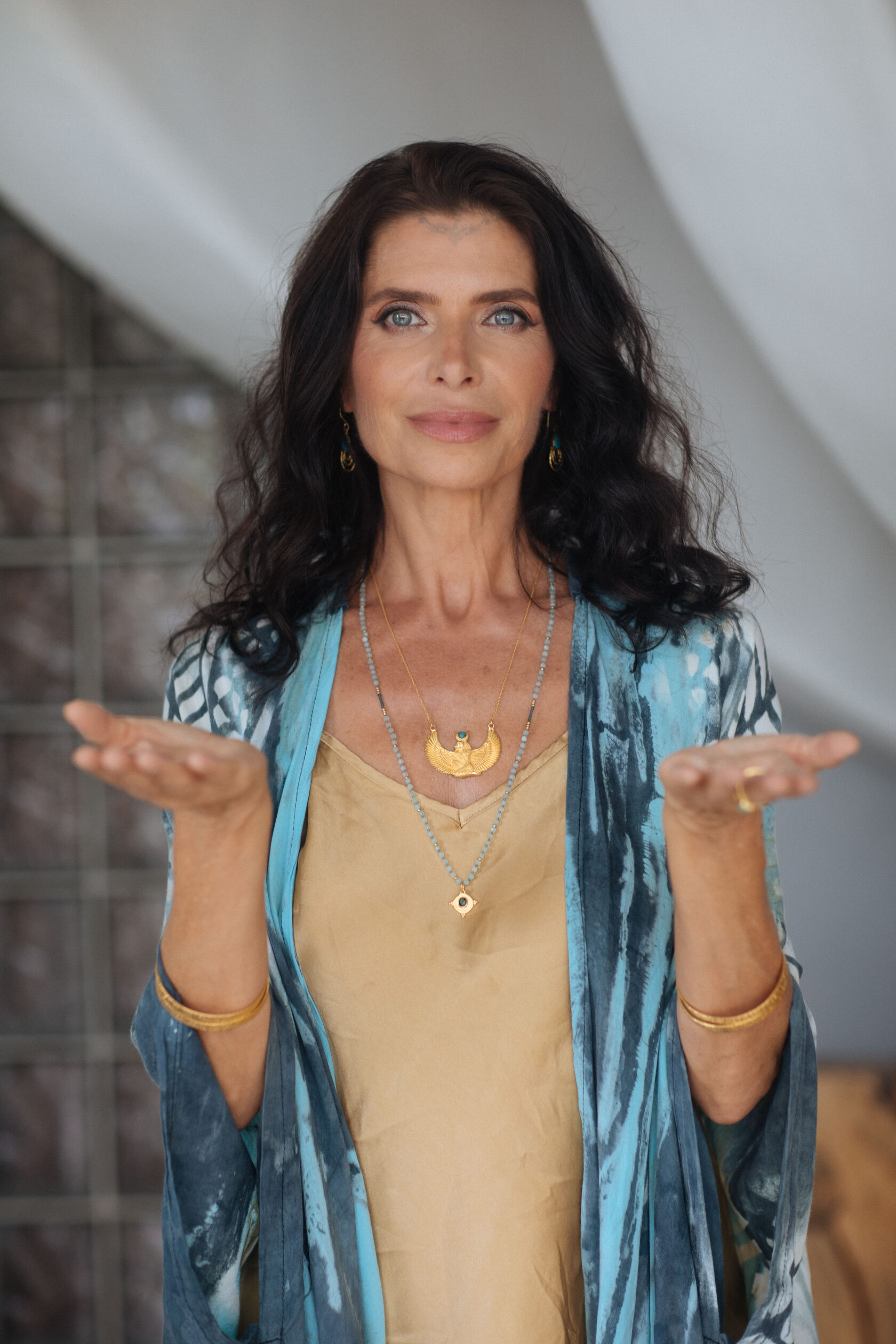
The fight-or-flight response is the body's oldest survival mechanism — a cascade of physiological changes that prepare a person to confront or flee from danger. In Maya Mandala's practice, this is treated as a real, physical event — held in the body as tension, a held breath, a contracted posture — and worked with as such. Maya has worked with this directly for over 30 years, teaching that nervous system regulation is a body-based skill first and a mental one second.
In her teaching, three things reliably move this state: conscious movement, extended breath, and seated stillness — the same three channels she returns to throughout her work. The shift this produces is physiological and immediate, something a person can feel directly, often within a single session.