


Flower of Life
A pattern of evenly spaced, overlapping circles with genuine ancient attestation across several unconnected cultures. In Maya Mandala's practice, it is used as a meditation focus and a movement principle within Mandala Dance.
- Term
- Flower of Life
- Category
- Cross-Tradition Symbol
- Related Concepts
- Sacred Geometry, Mandala, Mandala Dance, Meditation, Archetypes
- Level
- Beginner
What the Flower of Life Means
The Flower of Life is a geometric pattern made of multiple evenly spaced, overlapping circles, arranged so that each circle's center sits on the circumference of the surrounding ones. It is one of the more widely recognized examples of what is now called sacred geometry.
Origins: Genuinely Ancient, and Independently Attested
Unlike the modern umbrella term "sacred geometry" itself, this specific pattern has real, old attestation. One of the earliest known examples appears on a palace threshold from the reign of the Assyrian king Ashurbanipal, and one of the most striking is found at the Temple of Osiris at Abydos in Egypt, where nineteen overlapping circles were drawn in red ochre. Similar patterns have also been found in European, Middle Eastern, and other historical contexts, appearing independently across cultures with no known contact with one another.
What the Ancient Sources Actually Show
Because the pattern appears across such varied cultures and periods, historians are cautious about assigning it one single, unambiguous ancient meaning. The design's significance appears to have varied by historical and cultural context rather than reflecting one continuous, unified tradition of interpretation passed down intact from a single source.
Leonardo da Vinci's Interest
Leonardo da Vinci did study and sketch the Flower of Life and related forms, including the simpler six-circle "Seed of Life," alongside his broader interest in geometric proportion and the golden ratio. This is a real, documented historical interest in the pattern's mathematics — not evidence, on its own, of a hidden ancient message, a framing some popular sources apply more dramatically than the historical record supports.
Contemporary Interpretations
The now-common idea that the Flower of Life "encodes the blueprint of creation" or contains every fundamental geometric form is a modern interpretive layer, significantly shaped and popularized by twentieth-century sacred-geometry writers, most notably in the 1990s. This is a meaningful, widely embraced interpretation for many people today — but it is a modern addition, not a claim documented among the ancient cultures that originally drew the pattern.
How Maya Mandala Uses This Symbol
In Maya Mandala's practice, the Flower of Life is used as a meditation focus — a pattern the eyes and mind can rest on to settle into a quieter, more contemplative state — and as one of the geometric principles behind movement in Mandala Dance, where circular, interlocking pathways echo the same structure.
- it functions as a meditation object — simply resting attention on the pattern can quiet the mind;
- it symbolizes interconnection — no circle in the pattern stands alone;
- it can be traced or drawn — the act of drawing it is itself used as a contemplative practice;
- in movement practice, it becomes a felt structure rather than only a visual one.
Common Misconceptions
Ancient cultures all understood the Flower of Life the same way
The pattern's documented meaning varied by context and culture. There is no single, continuous ancient tradition of interpretation running through every culture where it appears.
The "blueprint of creation" interpretation is how the ancient Egyptians understood it
That specific framing is a modern interpretive layer, popularized significantly in the twentieth century. It is a meaningful lens for many practitioners today, but it should be understood as a modern addition, not a decoded ancient message.
The Flower of Life is exclusively Egyptian
It is genuinely multicultural, with early examples also found in Assyrian and other contexts, appearing independently rather than spreading from one single origin point.
Related Concepts
In Maya Mandala's Self-Discovery Dictionary, this concept connects to other terms:
Frequently Asked Questions
What is the Flower of Life in simple terms?
It is a pattern of evenly spaced, overlapping circles, found in temples and art across several ancient cultures and used today as a focus for meditation.
Is the Flower of Life a religious symbol?
It appears in several religious and cultural contexts historically, but it is not exclusive to any one of them, and its documented meaning has varied by context rather than following one single tradition.
Did Leonardo da Vinci really study this pattern?
Yes, this part is genuinely documented — he sketched the Flower of Life and related forms as part of his broader study of geometric proportion. Claims of a "hidden decoded message," however, go beyond what the historical record shows.
Does the "blueprint of creation" meaning go back to ancient times?
Largely no. That specific interpretation was significantly developed and popularized in the twentieth century. The pattern itself is ancient; this particular meaning layered onto it is comparatively recent.
How does Maya Mandala use the Flower of Life?
As a meditation focus and as one of the geometric principles shaping movement pathways in Mandala Dance.
The Takeaway
The Flower of Life is a genuinely ancient pattern, independently attested from Assyria to Egypt, though its documented meaning varied by culture rather than following one unbroken tradition. The now-popular "blueprint of creation" reading is a real, meaningful modern layer — worth enjoying honestly as modern, not mistaken for ancient fact. In Maya Mandala's practice, it supports meditation and shapes the movement structure of Mandala Dance.
What would change if you truly felt that everything around you emerged from the same source?
No need to answer. Just notice what arises.
Programs for Deep Inner Work
Practices that help you approach this topic with awareness.
Unfolding Your Abilities
Developing awareness, intuition, and the ability to see the whole picture.
Learn More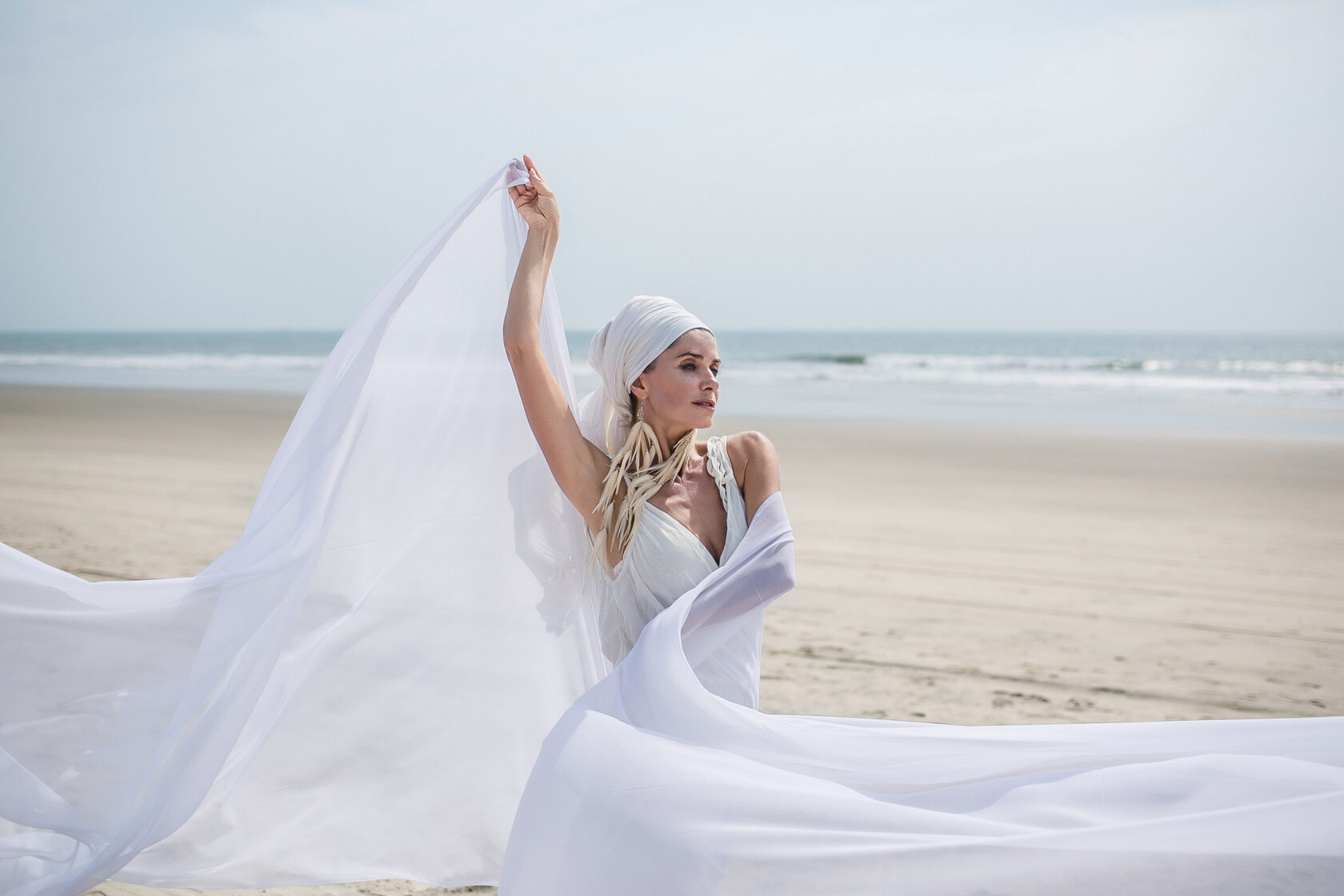
Mandala Dance. Level 1
A retreat exploring embodied movement, presence, and creative expression through Maya's signature Mandala Dance method.
Learn More